Self-paced video course

Lead from Flow.

Twenty-five short video teachings, one for each chapter of Shift to Flow, each with its guided practice. Learn at your own pace how your nervous system shapes the way you lead — and train it until calm and clarity hold under pressure.

Start free · 3 modules See all 25 modules

Is this you?

You know a lot about leadership. Under pressure, the old pattern still wins.

Sounds familiar?

  • You react in hard conversations and replay them for hours afterwards.
  • You've done the trainings and read the books — and it didn't last.
  • You're always on, and calm only comes on holiday, if at all.
  • You sense that change has to go deeper than methods and frameworks.

What you'll take away

  • A working map of your nervous system — and why thinking alone won't get you there.
  • Twenty-four practices you can use in the middle of a working day.
  • A language for what happens in teams and organisations under pressure.
  • A way of leading from presence instead of alarm — from any role.

How it works

Learn it, practise it, live it.

  1. LearnA 10–15 minute video teaching per chapter: 3–5 key ideas, explained plainly.
  2. PractiseThe chapter's guided practice from the book, as audio. This is where change happens.
  3. ReflectOne question to take with you, and to write down.
  4. Carry itInto the meeting, the hard conversation, the week. At your own pace.

“Instead of just talking, reading and studying about neuroscience, you will put what you are learning into practice on yourself and the systems around you.”

Shift to Flow

The curriculum

Twenty-five modules in five parts.

One module per chapter of the book. The page number shows where the chapter starts in the paperback.

Part I Why

Why leadership needs an upgrade — and why it starts in the body.

01Preface Free

A training program for your nervous system, not something to just read.

  • Change happens in the nervous system, not in rules of behaviour
  • The regeneration gap between digital tech and human culture
  • From power-over to leadership by everyone who can
  • Reader mode and practitioner mode: why irritation means learning works

Practice: Notice the thinking  ·  Book, p. 8

02Setting the Scene Free

Why an Agile and digital-tech professional ended up working with the nervous system.

  • Social tech vs. social high tech
  • Powering through is inherited
  • What ignoring your inner compass costs
  • Islands of coherence — and the price of holding them alone
  • Transformation runs through the body

Practice: Where does the thought come from?  ·  Book, p. 13

03On Sportsmanship Free

Train regenerative leadership like an athlete — the muscle is the nervous system.

  • Mental fitness is the whole mind, not only thinking
  • Finite and infinite games
  • Present in the race vs. wanting it over
  • “I know that I don't know what I don't know”
  • Comfortable with discomfort: suffering is optional

Practice: Stay with the outbreath  ·  Book, p. 22

04On Emotional Intelligence

Own your emotions — and every hard conversation becomes a chance to grow.

  • “Nobody else causes my emotions”
  • The bodymind: thoughts, emotions and sensations
  • A rule of thumb: thinking means you missed the trigger
  • Emotions in safe moments are the nervous system healing itself
  • From debate to dialogue

Practice: Twenty percent in the body  ·  Book, p. 33

05The Emergence of Agility in Digital Tech

Agility showed how to handle complexity — and failed where leaders didn't change themselves.

  • Include the marginalised: the future shows at the breaking points
  • Agile is not Scrum
  • Why scaling failed — and why AI pilots stall now
  • Mount Stupid and the four stages of competence
  • Users vs. masters of technology

Practice: Thirty percent on the breath  ·  Book, p. 41

06Leadership as an Everyone-Who-Can Phenomenon

Leadership isn't a position; it's the capacity to sense and respond, from any role.

  • We co-create our systems in every moment
  • Power-over is a collective memory
  • Eye level needs two moves at once
  • Response-ability, and its limits
  • Change happens in many small exchanges

Practice: Notice the effort  ·  Book, p. 53

Part II The Nervous System

A working map of your nervous system, and how to train it.

07Nervous System 1x1

A working map of your nervous system — and the torch model the rest of the course builds on.

  • Rider and elephant
  • Four layers of the brain, from reflex to integration
  • The alarm that takes over — and can become chronic
  • “I am responsible for my emotional experience”
  • The torch: narrow beam and wide beam

Practice: The gap after the outbreath  ·  Book, p. 63

08Co-Regulation as Applied Neuroscience

Your breath regulates you; your presence regulates others.

  • Breath steers the heart
  • Co-regulation shapes the nervous system
  • The regenerative moment: opening and integration
  • Two hemispheres, two kinds of attention
  • A map of the body for practice

Practice: Exhaustion and numbness  ·  Book, p. 75

09Trauma Integration as Transformation Engine

Trauma isn't the event — it's energy that couldn't complete its cycle.

  • Trauma is an intelligent survival function
  • Why animals shake — and we don't
  • The iceberg and the water plants: don't grasp too early
  • Ancestral trauma, and life's wish to heal
  • Emotions as the engine of change

Practice: Widening circles  ·  Book, p. 88

10Collective Trauma in Organizations

Organisations inherit the unhealed past of the society they come from.

  • What a traumatised society calls normal
  • Lost healing practices, and cultural debt
  • How it shows up at work
  • Descendants of victims and perpetrators
  • The way out is collective

Practice: Tissues and cells  ·  Book, p. 103

11How Social High Tech Enables Real Change

Only a culture that has grown inner capacity can master digital high tech.

  • Why a traumatised culture can't be digitally sovereign
  • Presence: 90 percent of performance
  • Frequency and the container
  • Inner work is biological
  • Every digital transformation is a cultural one

Practice: Who is the I in me?  ·  Book, p. 120

12Athletes of Regenerative Leadership

A daily practice is what makes the rest of the day practicable.

  • Practice like brushing your teeth
  • Opening and integration: don't chase the high
  • The shape of a formal practice
  • When you notice you're thinking
  • The hero's journey and the infinite game

Practice: Revisit the overwhelming moment  ·  Book, p. 136

Part III Organizations as Gyms

Why your workplace is the best training ground you have.

13Islands of Coherence

A small coherent group can lift a whole system — if it survives the pushback.

  • Small islands lift systems far from equilibrium
  • The tipping point, and what speeds it up
  • The catalyst's life: every obstacle as fuel
  • Thriving isn't comfort
  • Why islands disturb — and how to stay

Practice: Your hardest problem, in the body  ·  Book, p. 152

14Organizations as Nervous System Gyms

Your workplace is the best training ground you have.

  • Culture shapes the product
  • A supercomputer of nervous systems
  • Polarities, and the tensions that lead the way
  • Extend the map
  • Agile rituals as soil

Practice: Weave your relational web  ·  Book, p. 162

15Deliberately Developmental Communities

Growth is a lifelong upgrade of your operating system — it needs edge, home and groove.

  • Transformation as lifelong detangling
  • The Chief Evolution Officer question
  • Edge, home, groove
  • Horizontal vs. vertical learning
  • Why we need stuckness

Practice: Inside and outside  ·  Book, p. 185

16Integral Sensemaking and Adaptive Action

A compass for complex change: the inner game runs the outer game.

  • The Integral map
  • Flow has an inner dimension
  • Looking at vs. looking as a system
  • What? So what? Now what?
  • Presencing and self as instrument

Practice: The cost of the shortcut  ·  Book, p. 203

17Refactoring as Regeneration

Technical debt tells you exactly where your culture is fractured.

  • Technical debt as deferred cost
  • Business vs. IT
  • Technical, organisational and psychological debt are one
  • Resistance carries gold
  • IT programmes as cultural refactoring

Practice: Your roots  ·  Book, p. 226

18Pioneers and Artists

Start small, root deep — and let craft become art.

  • Pioneer plants and the gentian
  • Learn social high tech like a language
  • Cohorts and state experiences
  • Start here and now
  • From craft to art

Practice: Listen upward  ·  Book, p. 234

Part IV The Cohort Journey

What happens when a group practises together, and how it lasts.

19How the Cohort Finds Itself

The journey starts before the first session — in the questions you dare to answer.

  • The three enrolment questions
  • Enrolment is already the work
  • Selling as an artist
  • Evolutionary and creative tension
  • Safety first

Practice: Ask the land to receive you  ·  Book, p. 242

20Activating a Developmental Cohort

Safety comes from the facilitators' inner state — the container is knitted on a subtle level.

  • The designed alliance
  • Align knowledge and language first
  • Knitting the container
  • Transparency: the work happens in the room
  • Intention, spoken aloud

Practice: The full body scan  ·  Book, p. 256

21Sensing Journey and Retreat

Go to the edges, feel what's there — and digest it together.

  • Broken glasses: our perception is partial
  • Go where the system breaks
  • The retreat as the “So what?” step
  • “The remedy of fragmentation is love”
  • The rhythm of a retreat

Practice: Be the awareness  ·  Book, p. 268

22Deepening and Integration

After the fire is lit, the work is keeping it burning.

  • The campfire and the embers
  • Transformative pressure in the pipes
  • Developmental triads
  • Rhythms: moon, seasons, quarters
  • Lead by following tensions

Practice: Surf the outbreath  ·  Book, p. 280

23Creating Community and Scaling Transformation

Community exists only as long as someone convenes it.

  • Convening is leadership
  • Falling back isn't going backwards
  • Nobody can fix it for you
  • Victim and perpetrator aren't binary
  • Scale wide and deep

Practice: Sense the wider field  ·  Book, p. 297

Part V Beyond the Organization

Society, the living world, and your handprint.

24Regenerative Organizations in Society

Start where you are, not where you dream to be.

  • The rubber has to hit the road
  • Projecting difficulty repeats the pattern
  • Footprint and handprint
  • People carry the change on
  • A business and a democratic imperative

Practice: You are planet as well  ·  Book, p. 310

25Regenerative Organizations on Our Planet

Healing ourselves and healing our relationship with the living world are one process.

  • The loop — and the only exit: integration
  • We are planet
  • Co-regulation with nature
  • From egosystem to ecosystem
  • Shake like the gazelle

Practice: Closing practice in nature  ·  Book, p. 322

Start free

The first three modules, free.

Get the first three modules of Lead from Flow by email: the preface, the setting and the athlete's view of leadership — each with a teaching, a guided practice and a question.

No account, no payment details. Just your first name and email address.

The sign-up form is on its way. Until then, write to randolf@cogrow.space and I'll send you the link.

The full course

Choose how you want to learn.

Self-paced

Lead from Flow

25 modules · video + guided audio · at your own pace

For you if you want to work through the whole book with a guide — in your own time.

All 25 teachings, 24 guided practices and a question for every module.

€129incl. VAT

Included

Practice Community · yearly

Weekly live class · sitting together · practice triads

For you if you want to practise with others, not only on your own.

Join the Practice Community for a year and the full course is included.

Live

Book & Practice Circle

8 weeks · 5–7 people · 90 minutes live each week

For you if you'd rather go through the book in a small guided group.

One practice at a time, together — the book included as a gift.

€195

Friends and members of our network receive a personal discount code.

Before you start

Practice, not therapy.

This course is practice. It does not replace medical or psychotherapeutic treatment.

Some practices invite you to stay with difficult sensations or memories. Go gently, and stop whenever it's too much. If you are currently in acute burnout, depression, trauma therapy or a crisis, please speak to your doctor or therapist first.

Questions

Good to know.

Do I need the book?

No — each module stands on its own. With the book, you get more out of it: every module follows one chapter and its Practice Time. You can order a signed copy here.

What language is the course in?

English. The videos are spoken in clear, simple English.

How much time does it take?

About 20–30 minutes per module: the teaching, then the practice. One or two modules a week is a good rhythm — it's training, not a binge.

How is this different from the Practice Community?

The course is the map, at your own pace. The Practice Community is where you train together, live, every week. If you join the community for a year, the course is included.

Is the price final?

€129 including VAT, one payment, no subscription.
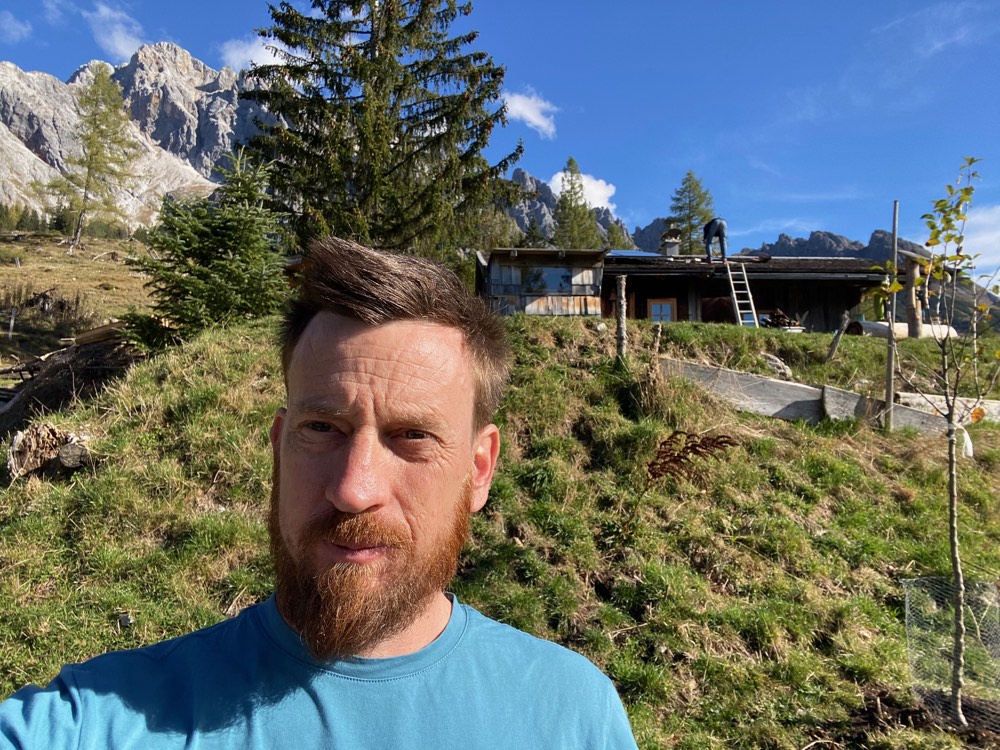
Randolf Speigner, author of Shift to Flow

Your guide · Randolf Speigner

Questions before you start?

Write to Randolf — about the course, or about which way in fits you best.

Author of Shift to Flow · faculty member at The Collective Edge, training enterprise agile coaches and transformation leaders · founder of CoGrow.Space

Operated by CoGrow.Space